


Most days already feel full, with school routines, small errands, meals, and everything in between taking up more time than expected, so the idea of adding “learning at home” into that mix can feel like one more thing to figure out.
But it rarely looks the way people imagine it. There’s a moment most parents recognise, when your child is quietly absorbed in something simple, stacking blocks or talking to a toy, and while it seems ordinary, they’re actually working things out in their own way. That’s learning, just without the structure we usually associate with it.
At home, learning tends to blend into play without much effort, and it doesn’t need to feel organised to be effective. Many of the best fun learning activities for kids begin in everyday moments: sitting at the kitchen table, listening to a story before bed, or even in the middle of a slightly messy living room, where something small sparks curiosity.
This article walks through simple, realistic ways to turn everyday time into meaningful learning experiences your child will actually enjoy.
Why Learning Through Play Is Important
Supports Brain Development
Young children absorb information quickly, but not always in ways adults expect. They learn by doing, touching, and repeating. When kids build towers or sort objects, they’re practicing problem-solving without realizing it. That hands-on engagement strengthens memory and understanding more than passive learning.
Builds Creativity and Curiosity
Children don’t usually worry about “getting it right.” They experiment. Sometimes they mix colors and end up with something odd, and honestly, that’s part of the charm. These small experiments feed curiosity. Over time, curiosity turns into confidence.
Strengthens Parent-Child Bond
Time spent together matters, but shared attention matters more. Sitting down and doing even simple educational activities at home creates a connection. It’s not always about teaching. Sometimes it’s just being present while they figure things out.
Easy Indoor Learning Activities for Kids
DIY Arts and Crafts
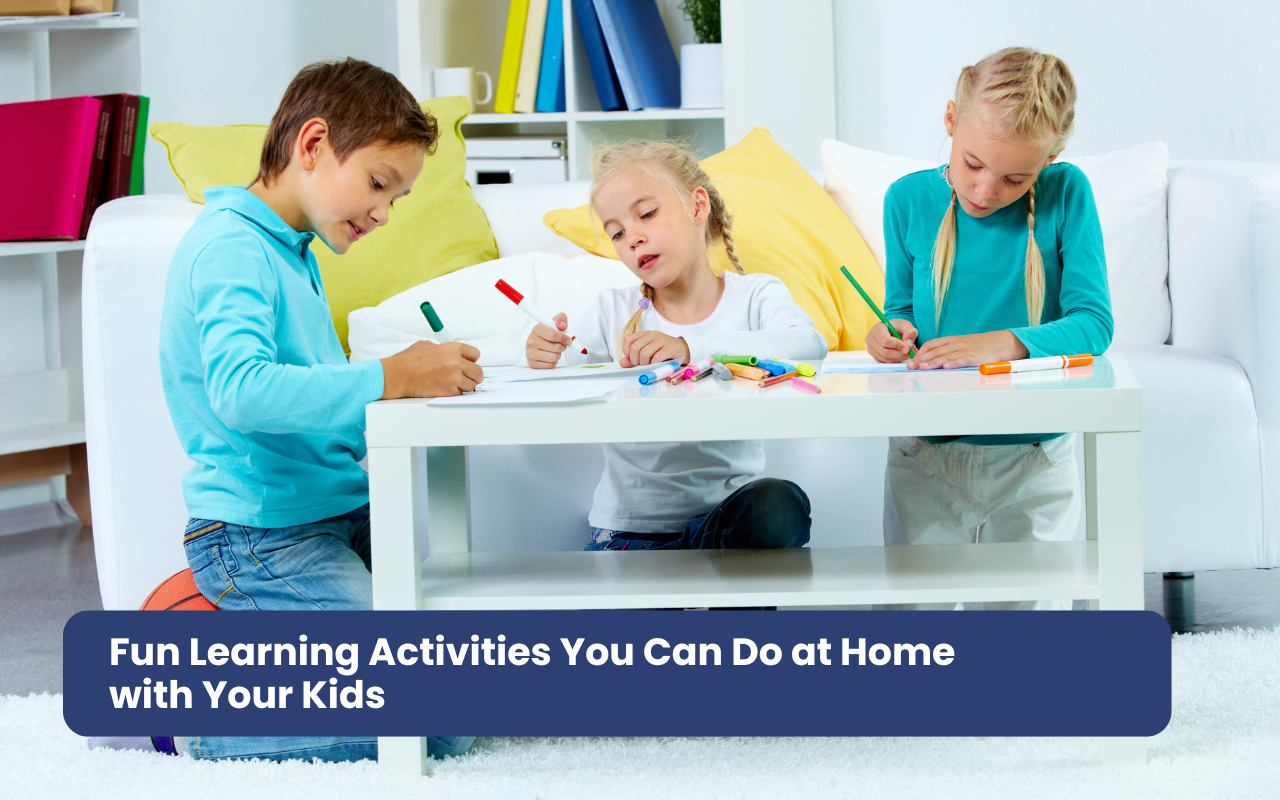
You don’t need a perfect setup, just paper, crayons, maybe some glue, and that’s usually enough to get started, because children tend to focus deeply when they’re creating something, even if it’s just shapes or scribbles.
What stands out over time is that they’re less concerned with how it turns out and more with the act of making it, and that’s where the learning happens. These kinds of fun learning activities for kids quietly improve motor skills and patience.
Storytelling and Reading Time
Reading aloud still works, even on days when attention drifts, and it feels like they’re only half-listening. Try asking small questions during storytime, like what might happen next or why a character feels a certain way, to keep them loosely engaged.
The answers don’t always make sense, and that’s fine, as language develops gradually, and these small exchanges tend to matter more than they seem at the time.
Puzzle and Problem-Solving Games
Puzzles, matching games, or even simple riddles all help build thinking patterns, though not every child takes to them straight away. It’s fine if they lose interest and come back later, as that pause is still part of how they engage.
These are among the more structured learning activities for kids at home, but they don’t need to feel fixed or overly planned to be effective.
Music and Dance Activities
Turn on some music and let them move however they want. It doesn’t have to look organized. Rhythm, coordination, and expression all come into play here.
Sometimes kids will repeat the same movement over and over. It might seem repetitive, but repetition is how they learn control and confidence.
Educational Activities That Feel Like Play
Counting Games with Everyday Items
Count anything around you, whether it’s fruits on the table, spoons in the kitchen, or steps while walking, because it doesn’t need to resemble a formal math lesson for children to start picking it up.
“Let’s count how many apples are here.”
Then maybe, “What happens if we take one away?”
These small interactions turn daily routines into educational activities at home without extra effort.
Alphabet and Word Games
Letters show up in everyday places, on cereal boxes, street signs, and books, and pointing them out casually in those moments helps children start recognising them without it feeling like a lesson.
You might say, “That’s the letter A. Can you find another one?”
Sometimes they will. Sometimes they won’t. Both are fine.
This kind of exposure builds familiarity over time, and gradually, that recognition begins to turn into reading.
Science Experiments at Home
Simple experiments tend to stay with children, whether it’s mixing baking soda and vinegar, watching ice slowly melt, or planting seeds and waiting to see what happens next.
Children don’t always ask “why” immediately. But later, they remember. And then the questions come.
These moments sit right in the middle of fun learning activities for kids and natural curiosity.
Outdoor Learning Activities for Kids
Nature Exploration
Step outside, and the pace shifts a little, with leaves, insects, and stones suddenly becoming points of interest without any setup. You might not plan anything, but children usually find something to focus on, whether it’s a bug crawling past or the shape of a leaf that turns into a longer conversation.
These moments feel unstructured, yet they naturally become some of the most relaxed learning activities for kids at home, even when you’re not actually indoors.
Physical Play and Movement
Running, jumping, and balancing, these kinds of physical activity support brain function more than we often think. They also help release energy, which tends to make the rest of the day feel a bit more manageable.
Gardening Activities
Gardening brings a different kind of pace, where planting seeds introduces patience, watering builds a small sense of routine, and watching something grow creates a quiet feeling of progress, even if not everything works out the way you expect, which is part of the experience too.
Tips for Making Learning Fun at Home
Choosing the right daycare in Arlington often comes down to how naturally children settle in and feel comfortable throughout the day.
Keep Activities Short and Engaging
Keeping activities short often works better than stretching them out. As attention spans shift from day to day, even short bursts of ten focused minutes can be enough when a child is engaged.
Follow Your Child’s Interests
If your child is interested in something, lean into it, whether it’s dinosaurs, colours, or vehicles, because when they’re naturally curious about something, they stay involved without much effort.
Encourage, Don’t Pressure
As children respond quickly to tone, encouragement plays a bigger role than it seems. A relaxed approach tends to keep them open to trying things, even when things don’t go as planned.
Create a Routine
A simple routine can help bring some consistency to the day, but it doesn’t have to be strict. A general flow to the day gives children a sense of stability.
Many families who later explore programs like daycare in Arlington, WA, notice that children adapt more easily when they’re already used to a basic rhythm at home.
Conclusion
Learning at home doesn’t usually follow a neat plan, and it doesn’t need to, as some days feel productive while others feel a bit scattered, and both still contribute in their own way.
The focus isn’t on recreating a classroom but on creating moments where children feel curious, supported, and comfortable exploring things at their own pace, and over time, those moments start to build on each other.
At some point, you begin to notice how much they’ve picked up along the way, often through fun learning activities for kids that never really felt like lessons to begin with.
Give Your Child a Head Start with Blancas Daycare De Colores
Looking for a nurturing space where learning feels natural and engaging? At Blancas Daycare De Colores, we offer a warm, supportive environment that helps children grow through play, creativity, and structured care.
Call us today at 707-210-4802 to learn how our programs can support your child’s early development while giving you peace of mind every day.
FAQs
What are the best learning activities for kids at home?
The best ones are simple and engaging. Reading, drawing, counting everyday objects, and storytelling work well. Activities that allow interaction tend to hold attention longer.
How can I make learning fun for my child?
Keep things relaxed. Use games, movement, and everyday situations. When learning feels like play, children stay interested without needing constant reminders.
How much time should kids spend on learning activities daily?
There isn’t a fixed number. Short sessions spread through the day often work better than long ones. It varies depending on age and mood.
Are indoor activities enough for child development?
Indoor activities help, but outdoor experiences add variety. Movement, fresh air, and exploration support overall growth in ways indoor settings sometimes can’t.
What activities help toddlers learn faster?
Repetition, sensory play, and simple interactions like naming objects or reading aloud. Toddlers learn best through consistent exposure.
Do I need special materials for home learning activities?
Not really. Most educational activities at home can be done using everyday items. Creativity matters more than materials.