


With so many screens competing for kids’ attention, it can be hard to find a place where nature comes first. More people now realize that young children do best when they can dig in the dirt, watch bugs, or jump in puddles. While this idea isn’t new, it’s finally getting noticed.
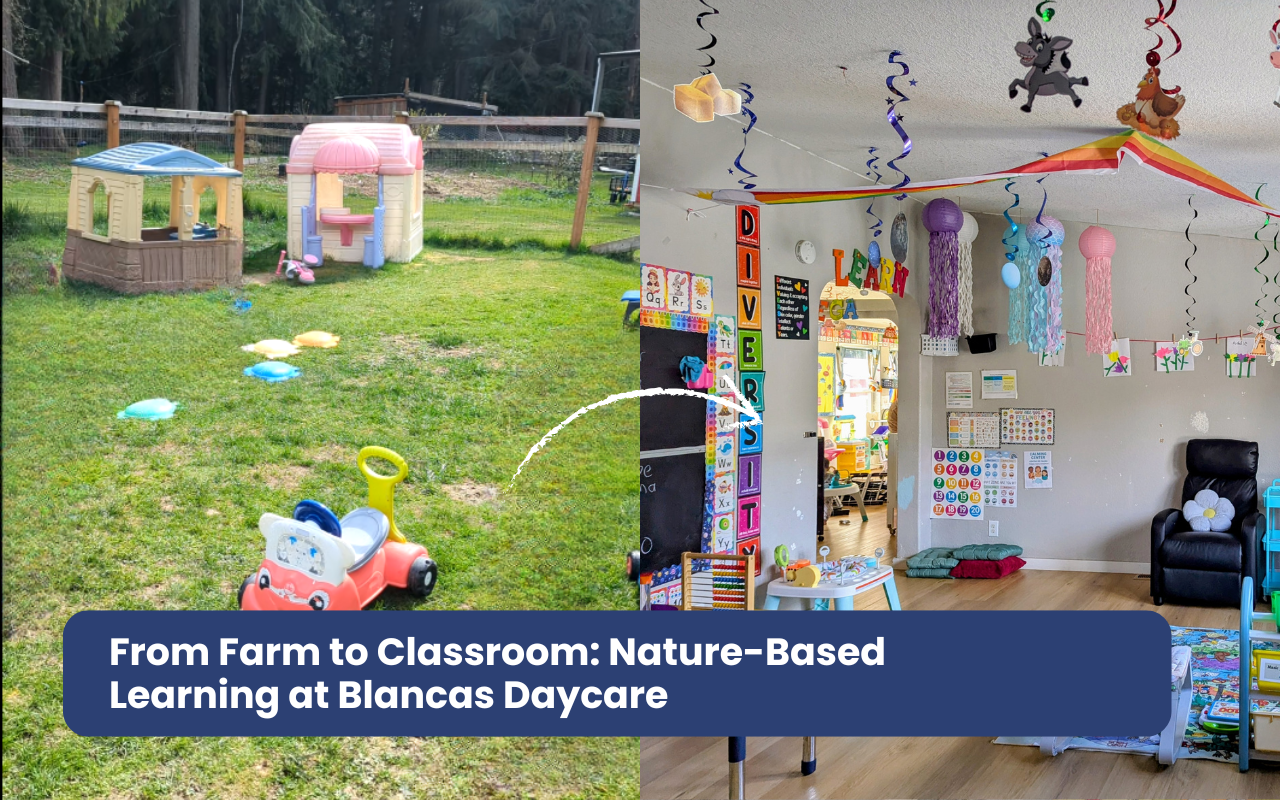
At Blancas Daycare De Colores, learning goes beyond the classroom. Our “From Farm to Classroom” approach means nature is a real teacher, not just something in the background. We weave nature-based learning into each day, so children build skills in a calm, connected, and hands-on way.
What Is Nature-Based Learning?
Nature-based learning means children learn by spending time in nature. They might watch insects, plant seeds, measure rain, or notice different textures and sounds outside. The goal isn’t to memorize facts, but to think, ask questions, and learn by doing. For many families, this serves as outdoor education for kids, a way for them to move, explore, and discover without screens.
The “Farm to Classroom” Concept at Blancas Daycare De Colores
At Blancas Daycare De Colores, “Farm to Classroom” helps children learn where food comes from and how things grow. We’re not expecting our toddlers to become master gardeners. Instead, we let nature’s cycles guide our learning. Seeds can teach science concepts, harvest time gets them working on their math skills and counting, and the soil is a vast playground for sensory experiences and problem-solving.
This kind of nature-based learning fits well with daycare learning programs. It can be done in small ways throughout the year, so children get used to routines but still find new things to enjoy.
Hands-On Learning Experiences
Kids learn best when they’re active and curious. Planting and watering help them practice patience, see cause and effect, and take on small responsibilities. Nature walks can turn into fun scavenger hunts for shapes, colors, or sounds.
Tracking the weather helps children learn early math by comparing concepts such as more and less, warm and cool, and dry and damp. Even snack time can be part of farm-to-classroom learning when kids notice textures and smells and think about where food comes from.
These activities are a natural part of outdoor education for kids and help children get ready for school, all without relying on worksheets.
Benefits for Children
Cognitive Development
Nature makes kids curious and helps them think. They start to guess what happens if a plant gets more water or why leaves look different. They learn to observe, sort, and use early science skills. Early childhood nature learning also builds language, since children need words to talk about what they see and feel. Good daycare learning programs use these moments for vocabulary, stories, and early reading, often without kids even noticing they’re learning.
Physical Development
Being outside gets kids moving. Climbing, balancing, digging, and walking on uneven ground help them grow stronger and more coordinated. Planting seeds and picking up small things build fine motor skills. That’s why many families want outdoor education for kids to be a regular part of the week, not just a special treat. Physical activity also helps kids rest better, eat well, and feel more settled indoors.
Emotional & Social Growth
Nature can calm children, but it also gives them small challenges. One child might be nervous about touching dirt but feel proud after trying. Another might want to run ahead but learns to wait with the group. Outdoor time helps kids work together, like taking turns with watering cans, helping spot a ladybug, or choosing where to plant. Nature-based learning helps children talk and solve problems together. Often, the best talks happen while looking at the ground together.
Sustainability and Environmental Awareness
Teaching kids about caring for the planet doesn’t need long talks. It starts with small habits and doing things repeatedly. Children learn that plants need care, living things depend on their surroundings, and waste matters when they see it in the garden. They start to see how their choices affect what happens. Early childhood nature learning helps kids respect the world in a simple, positive way. The main lesson is that care and attention help things grow.
Role of Educators at Blancas Daycare De Colores
Facilitating experiential learning
Teachers create activities that help children discover new things and ask questions when needed. The goal isn’t to give constant instructions, but to guide children as they explore. For example, a teacher might ask a child what they see on a plant’s leaves, then suggest comparing two stems. This way, daycare learning programs offer structure that encourages curiosity instead of taking it away.
Balancing structure with exploration
Kids do well with routines, but they also need time to try new things. Teachers balance both. Outdoor time might have a goal, like planting or observing, but children can still take their time and explore what interests them. This balance keeps nature-based learning organized but not strict, and helps kids who like routines feel safe trying something new.
Ensuring safety in outdoor environments
Safety is built through supervision, clear boundaries, and age-appropriate tools and spaces. Educators also teach safe habits: washing hands, respecting insects, and using gentle touch around plants. Done well, outdoor education for kids is not reckless or random. It is carefully planned so children can explore confidently while adults manage risks in practical, calm ways.
Parental Involvement and Community Impact
Many families like to support these ideas at home, even in small ways. Growing herbs on a windowsill can build on what children learn at daycare. Family activities, community gardens, or sharing tips about local parks help connect home and daycare experiences.
For families looking for childcare in arlington, this connection between home and daycare helps daily life feel more supported. The farm-to-classroom approach also teaches children they are part of a caring community, which is a lesson that lasts beyond any one project.
Why Choose Blancas Daycare De Colores?
Choosing childcare is a personal decision. Families usually want warmth, consistency, and a learning approach that fits their values. Blancas Daycare De Colores offers both structured academics and hands-on nature-based learning that feels real and practical.
Children gain a lot from regular outdoor time, caring teachers, and chances to connect what they learn in class with real life. If you’re looking for an arlington daycare center, our program gives children both strong academics and personal growth.
Conclusion
Farm to Classroom isn’t just a trend. It’s about going back to the idea that kids learn best from real experiences. When nature is part of their weekly routine, children grow curious, confident, and ready for school in a way that feels natural.
Want to know more about nature-based learning?
Contact Blancas Daycare De Colores to speak with our experienced staff and learn how nature-based learning helps children grow and enjoy learning. Call us at 707-210-4802 to learn about our enrollment options.
FAQs
What is nature-based learning in early childhood education?
It is an educational approach that uses outdoor experiences, natural materials, and exploration to support learning and development in young children.
How does the farm-to-classroom model work at a daycare?
Children participate in gardening, food preparation, seasonal projects, and outdoor activities that connect academic concepts with real experiences.
What are the benefits of outdoor learning for young children?
Outdoor environments support physical activity, problem-solving, creativity, emotional well-being, and stronger social interaction.
Is nature-based learning safe for kids?
Yes, our staff make sure to keep a close eye on them and follow all the proper safety procedures while they’re out exploring the great outdoors.
How does Blancas Daycare De Colores incorporate academics into outdoor activities?
Educators find ways to link what kids learn outside to what they’re studying in the classroom, whether that’s science, maths, learning new words, or letting their creativity shine.
Can parents participate in farm-to-classroom programs?
Many programs include events and activities where parents can join their little one and take part in what they’re learning
What age groups benefit most from this type of learning?
Infants through preschoolers benefit, with activities adapted to developmental needs, attention spans, and physical abilities.
How does this approach support sustainability education?
Children get to take on real responsibilities, like looking after the garden and recycling and composting, and learn about being kind to the planet.